

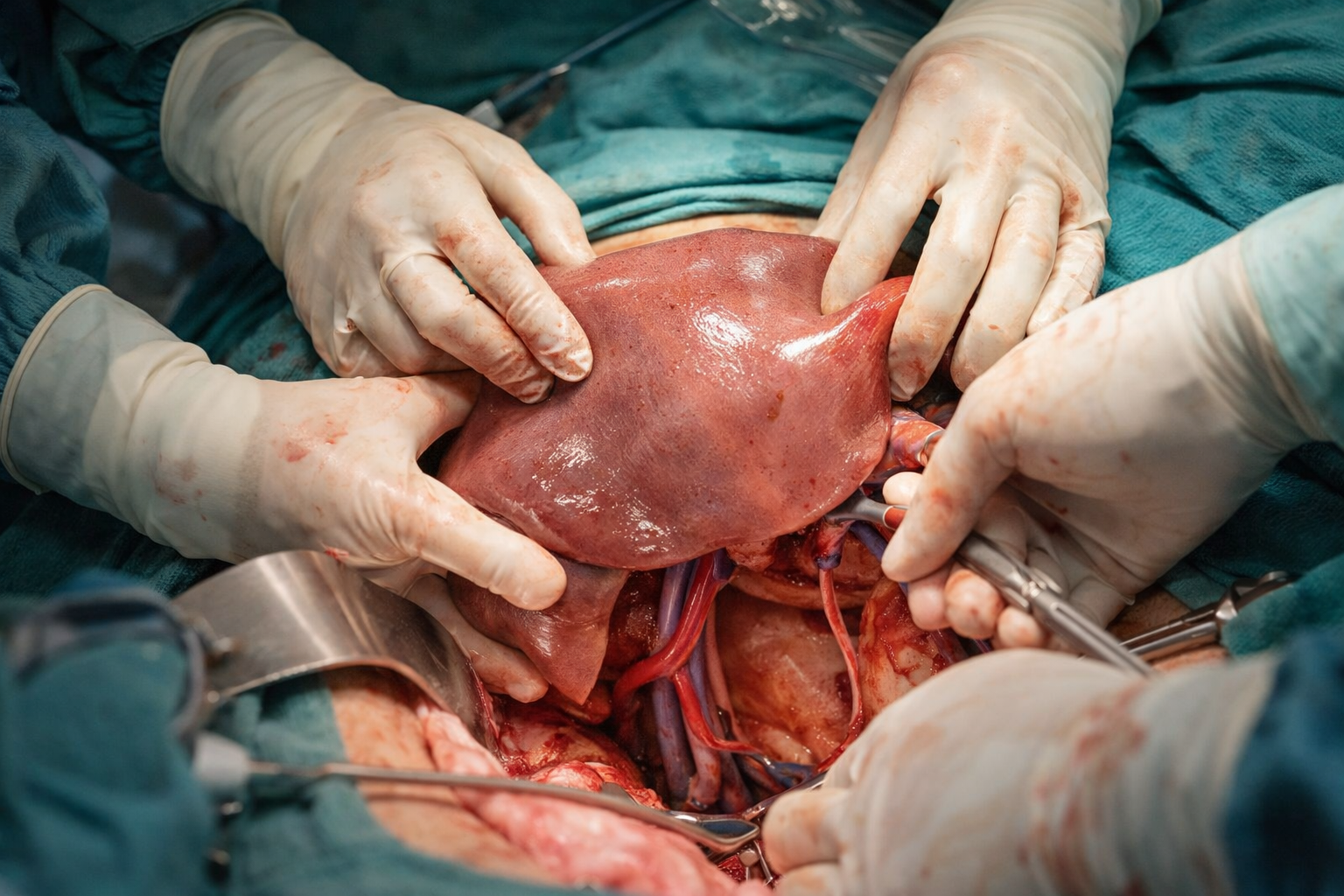
What Is Liver Transplantation?
Liver transplantation is a surgical procedure in which a diseased liver that has lost its function due to advanced-stage liver disease is replaced with a healthy liver. This procedure is an important treatment option aimed at improving both life expectancy and quality of life in suitable patients.
Liver transplantation can be performed using liver tissue obtained from:
- A living donor
- A deceased (cadaveric) donor
The most appropriate method is determined based on the patient’s medical condition and the results of detailed clinical evaluations.
Who Is Liver Transplantation Suitable For?
Liver transplantation may not be suitable for every patient. Therefore, potential candidates undergo a comprehensive evaluation process. In general, liver transplantation may be a treatment option for patients with:
- End-stage liver failure
- Advanced-stage cirrhosis
- Certain liver tumors
- Severe liver diseases that are congenital or acquired later in life
Suitability for transplantation is determined after clinical examination, imaging studies, and laboratory tests.
How Does the Liver Transplantation Process Progress?
The liver transplantation process consists of several stages:
1. Evaluation and Diagnosis
The patient’s overall health status, the stage of liver disease, and any coexisting medical conditions are thoroughly assessed.
2. Determination of Transplant Eligibility
Eligibility for transplantation is determined by a multidisciplinary team. If a living donor option is available, the donor also undergoes a detailed evaluation.
3. Surgical Procedure
The surgery is performed by experienced surgical teams. The duration of the operation and technical details may vary depending on the patient’s condition.
4. Postoperative Follow-Up
After surgery, the patient is closely monitored. Regular follow-up visits and treatment planning are essential components of this period.
Post-Transplantation Care
The period following liver transplantation is one of the most critical stages of treatment. During this time, the following are of great importance:
- Regular medical follow-up
- Medication therapy
- Lifestyle modifications
Adherence to medical recommendations plays a decisive role in long-term outcomes.
Important Points to Know About Liver Transplantation
- Treatment plans are individualized for each patient.
- The transplantation process involves more than just surgery.
- Long-term follow-up is an integral part of treatment.
For these reasons, liver transplantation should be carried out in experienced centers by specialized multidisciplinary teams.
What Is Liver Transplantation?
Liver transplantation is a surgical procedure in which a diseased liver that has lost its function due to advanced-stage liver disease is replaced with a healthy liver. This procedure is an important treatment option aimed at improving both life expectancy and quality of life in suitable patients.
Liver transplantation can be performed using liver tissue obtained from:
- A living donor
- A deceased (cadaveric) donor
The most appropriate method is determined based on the patient’s medical condition and the results of detailed clinical evaluations.
Who Is Liver Transplantation Suitable For?
Liver transplantation may not be suitable for every patient. Therefore, potential candidates undergo a comprehensive evaluation process. In general, liver transplantation may be a treatment option for patients with:
- End-stage liver failure
- Advanced-stage cirrhosis
- Certain liver tumors
- Severe liver diseases that are congenital or acquired later in life
Suitability for transplantation is determined after clinical examination, imaging studies, and laboratory tests.
How Does the Liver Transplantation Process Progress?
The liver transplantation process consists of several stages:
1. Evaluation and Diagnosis
The patient’s overall health status, the stage of liver disease, and any coexisting medical conditions are thoroughly assessed.
2. Determination of Transplant Eligibility
Eligibility for transplantation is determined by a multidisciplinary team. If a living donor option is available, the donor also undergoes a detailed evaluation.
3. Surgical Procedure
The surgery is performed by experienced surgical teams. The duration of the operation and technical details may vary depending on the patient’s condition.
4. Postoperative Follow-Up
After surgery, the patient is closely monitored. Regular follow-up visits and treatment planning are essential components of this period.
Post-Transplantation Care
The period following liver transplantation is one of the most critical stages of treatment. During this time, the following are of great importance:
- Regular medical follow-up
- Medication therapy
- Lifestyle modifications
Adherence to medical recommendations plays a decisive role in long-term outcomes.
Important Points to Know About Liver Transplantation
- Treatment plans are individualized for each patient.
- The transplantation process involves more than just surgery.
- Long-term follow-up is an integral part of treatment.
For these reasons, liver transplantation should be carried out in experienced centers by specialized multidisciplinary teams.